Bee removal in Cincinnati, Ohio is usually not about honeybees — and the distinction matters for your house and your wallet. The "bees" chewing perfect round holes in deck rails and fascia boards are carpenter bees, the papery gray nest under the eave belongs to wasps or bald-faced hornets, and the angry hum from a hole in the lawn is a yellow jacket colony. All of those are exactly what this line handles: call (513) 866-2941, describe what you're seeing and where the nest is, and get connected with an independent Cincinnati pro equipped to remove it safely.
One honest exception up front: honeybee swarms and established honeybee hives are pollinators, not pests, and the pros this line reaches don't exterminate them — a honeybee swarm call gets pointed to a local beekeeper who can collect it. If you're not sure which insect you have, describe it on the call; the difference is usually obvious from two sentences.
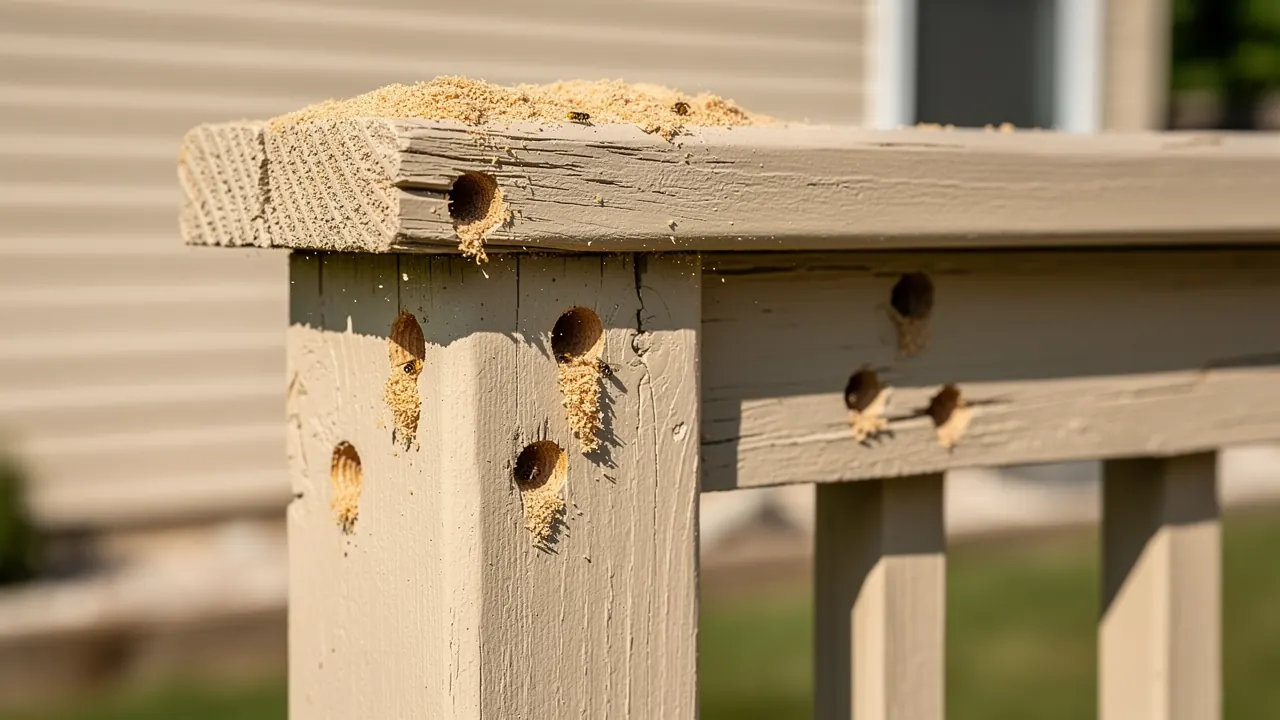
Perfect half-inch holes with sawdust below mean carpenter bees are drilling your fascia. Describe the damage and get a local pro on it.
Call (513) 866-2941 NowCarpenter Bee Control in Cincinnati: A Deck Classic
Every spring, carpenter bees come back to the same soft, unpainted wood — deck railings, fascia, pergolas, cedar fences — and extend last year's galleries. One season's holes look cosmetic. Several seasons of tunneling, plus the woodpeckers that dig for the larvae, turn fascia boards into scrap. Treatment is straightforward for a pro: treat the galleries, then seal and (ideally) paint the wood after the season, because bare wood invites next year's generation back. The neighborhoods with big wooden decks and older garages — Oakley, Pleasant Ridge, Anderson Township — fill this call log all spring and summer.
Wasps, Hornets, and Yellow Jackets: the Dangerous End of the List
Paper wasps under eaves are mostly a nuisance until the nest sits over a door. Bald-faced hornets build the football-sized gray nests in hedges and trees and defend them hard. Ground-nesting yellow jackets are the ones that put people in urgent care — a colony in the lawn can number in the thousands by late summer, and a mower pass over the entrance is how most Cincinnati homeowners find out. These jobs are not DIY: pros come with suits, dust applicators that reach into voids and soil, and the timing knowledge (dusk work, when the colony is home) that ends the nest in one visit.
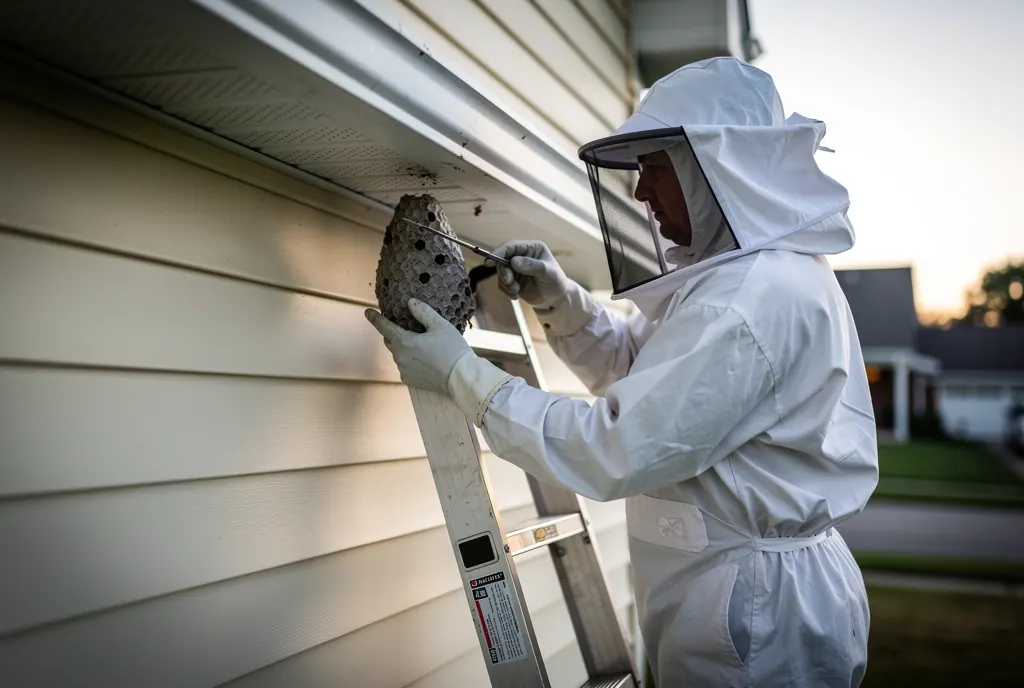
A hum from a hole in the lawn is a nest that gets angrier by the week. Call before mowing season finds it for you.
Call (513) 866-2941 NowWhat the Call Sounds Like
- Describe the insect and nest. Round holes with sawdust = carpenter bees. Gray paper nest = wasps or hornets. Hole in the ground with traffic = yellow jackets. A tight cluster of gentle bees on a branch = honeybee swarm, which gets a beekeeper referral instead of treatment.
- Describe the location. Height, distance from doors, whether kids or pets use the area — it sets urgency and equipment.
- Get routed. An independent local pro calls the play: removal, treatment, and prevention advice for the wood or void involved.
Costs track access and risk — reachable eave nests are routine, in-ground colonies and wall-void nests are not. Typical Cincinnati ranges live in the pest control cost guide. This is a free call-connection service; the pros are independent businesses you hire directly.
A nest never gets smaller by September — call (513) 866-2941 while it's still a one-visit job, or start at the contact page.
Describe where the nest is and how big, and get connected with a Cincinnati crew equipped to remove it safely.
Call (513) 866-2941 Now